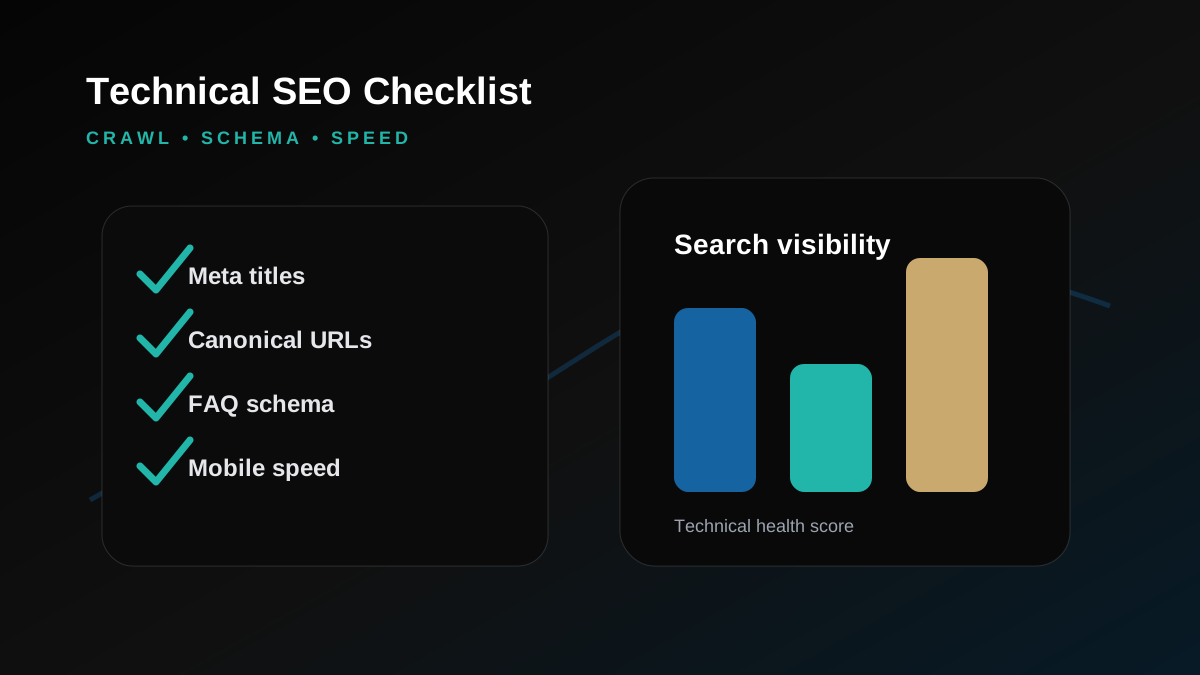
Search is changing, but the basics that help real customers still matter. Dubai businesses are now competing in a search environment where visitors may see traditional results, local results, AI summaries, comparison-style answers, videos, images, and brand mentions before they click. That does not mean SEO is finished. It means weak, generic pages have less room to hide.
For service companies in the UAE, the best response is not to chase a new trick every month. The better move is to make the website genuinely useful: clear service pages, original explanations, local proof, real project examples, strong FAQs, helpful internal links, visible contact options, and fast mobile pages. AI search systems still need reliable web content to understand who you are, what you do, and why a buyer should trust you.
Start with pages that answer real buyer questions
A buyer searching for web design company Dubai, SEO company Dubai, software development company in Dubai, or web hosting Dubai is usually comparing vendors. They want to know what you build, who it is for, how the process works, what experience you have, how support is handled, and what makes your work safer than a low-cost template.
That is why Gligx focuses on complete service pages instead of short brochure sections. A strong web design Dubai page should explain design quality, CMS control, SEO structure, responsive layout, speed, enquiry flow, and ongoing support. A strong SEO services Dubai page should explain technical SEO, content planning, local SEO, tracking, and realistic improvement work.
Use proof without overclaiming
AI search and normal search both reward clarity. If client names cannot be published, use safe category-based proof: government department workflows, luxury retail systems, hospital booking platforms, real estate enquiry flows, manufacturing software, eCommerce stores, or service business portals. This is more believable than vague claims like "best company" repeated many times.
Make internal links part of the article body
Internal links should not live only at the bottom of a page. A helpful article should naturally guide readers to related services. If a post talks about conversion, link to conversion rate optimization. If it talks about SEO-safe redesign, link to website redesigning in Dubai. If it talks about enquiry routing, connect it with WhatsApp CRM automation or custom CRM work.
What to update first
Start with the pages already getting impressions in Search Console. Improve titles, descriptions, first-screen content, FAQs, case-study proof, and CTAs. Then add supporting articles that answer specific buyer concerns. For Gligx, that means strengthening web design, website development, software development, SEO, hosting, mobile apps, eCommerce, payment gateways, and AI automation topics in a connected way.
How Gligx applies this
Gligx treats AI-era SEO as practical website improvement. We combine SEO, content structure, web design, schema, internal links, speed, analytics, and conversion improvements so the website is useful to both search engines and serious buyers.
A practical roadmap for UAE businesses
Most successful digital projects start with a simple conversation about how the business works today. What is slow? Where do leads get lost? Which team needs better visibility? Which reports are still prepared manually? Answering these questions early keeps the project grounded before any design, code, content, campaign, or integration work begins.
For marketing, content, sales, and technical teams, the roadmap normally moves through discovery, requirement mapping, content or data preparation, UX planning, technical architecture, development, testing, launch, analytics, and improvement. The order matters because it keeps the project connected to real business outcomes, not just a new screen or campaign.
Common mistakes we try to prevent
A lot of projects become harder than they need to be because the team jumps straight into tools or templates. Weak requirements, unclear ownership, missing reports, poor mobile experience, no conversion tracking, thin SEO structure, and no support plan after launch can all reduce the value of the work.
Disconnected systems create another quiet problem. If the website, CRM, accounting software, payment gateway, mobile app, SEO campaign, and reporting dashboard do not speak to each other, staff usually end up fixing the gap manually. That is where time, leads, and accuracy are lost.
How this connects with Gligx services
Gligx looks at digital work as a connected business platform. Depending on the requirement, a project may involve SEO services in Dubai, SEO-ready website design, hosting, SEO, analytics, UX design, API integration, or ongoing support. This helps UAE and GCC companies avoid too many separate vendors working on pieces that should fit together.
Before starting, we define success in plain terms. Useful measures include enquiry quality, sales follow-up speed, approval time, reporting accuracy, customer experience, organic visibility, campaign conversion rate, operational efficiency, and how easy the system is to maintain later.
What to prepare before contacting a development partner
A short brief is enough for the first discussion: current website or system links, the problem you want to solve, examples of workflows, required integrations, user roles, preferred timeline, must-have reports, and any SEO or marketing priorities. It does not need to be perfect. It just gives the technical team something real to respond to.
Measurement after launch
Launch is the start of the useful learning period. After a website, campaign, software module, or automation goes live, the business should review analytics, user behavior, enquiry quality, conversion rates, support questions, operational delays, and content performance. These signals show what should be improved next.
For websites and marketing pages, we usually watch impressions, rankings, organic clicks, qualified enquiries, call clicks, WhatsApp clicks, form completion rate, and landing page engagement. For software and CRM projects, stronger signals are task completion time, user adoption, report accuracy, approval speed, and reduction in manual work.
Dubai and GCC buyer expectations
Buyers in Dubai and the wider GCC market often make quick judgements. They expect fast response, a professional website, clear proof of capability, mobile-friendly pages, and reliable follow-up. A good digital project should therefore support both the public-facing brand and the internal team handling enquiries, approvals, delivery, or customer communication.
Trust is built through small details working together: clear service pages, practical FAQs, visible contact details, credible project examples, smooth forms, useful blog content, and a website that feels maintained. Those details help visitors understand the company before they speak to sales.
Long-term maintenance and support
Digital systems need care because business requirements, security expectations, browsers, search algorithms, marketing channels, and customer expectations keep changing. A project should include a sensible support plan for updates, bug fixes, content improvements, analytics review, hosting coordination, and future feature requests.
This matters most for UAE and GCC businesses that depend on digital channels for lead generation, customer service, operations, or transaction processing. A maintained system protects the initial investment and keeps the platform useful as the company grows.
The strongest results usually come when content, design, software, hosting, analytics, CRM, SEO, and support are planned as one ecosystem. Each improvement then strengthens the whole business platform instead of becoming a one-time isolated task.
Frequently Asked Questions
Does AI search replace normal SEO?
No. Helpful content, strong service pages, technical SEO, internal links, local proof, speed, and clear business information are still important foundations.
What should Dubai businesses update first for AI search?
Update priority service pages, FAQs, proof sections, internal links, author/reviewer details, images, schema, and conversion paths before adding random new pages.
Should content be written only for AI summaries?
No. Content should be written for real buyers first, with clear explanations, useful structure, and original business context.
Can case studies help SEO?
Yes. Case studies add trust, industry relevance, internal links, and original project context that generic service pages often lack.
How does Gligx improve SEO content?
Gligx reviews search intent, page structure, local relevance, internal links, FAQs, CTA placement, technical SEO, and whether the content sounds useful to a real buyer.
Is keyword stuffing useful in 2026?
No. Repeating the same phrase too often can make a page look weak. Natural wording, useful sections, and strong topical coverage are better.