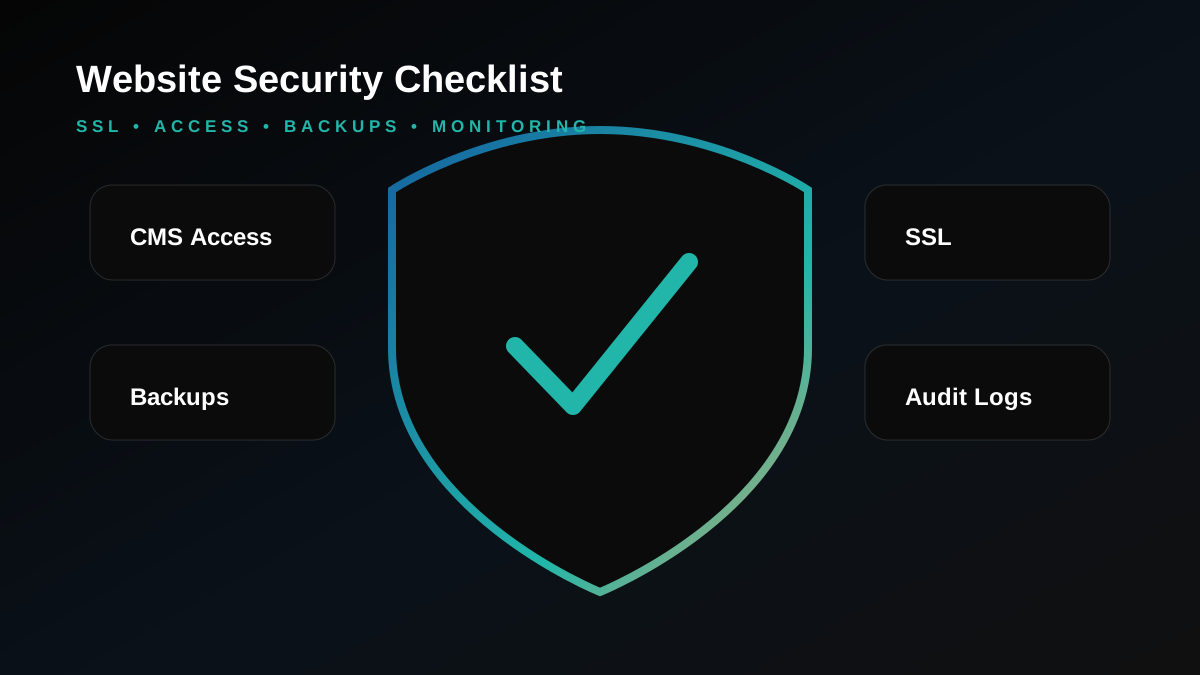
Website security is often noticed only after something goes wrong: a hacked CMS, broken contact form, spam injection, suspicious redirects, payment page issue, or blocked email delivery. UAE businesses should treat security as a normal part of website and software maintenance, especially when the site handles enquiries, payments, customer data, admin users, or SEO traffic.
Start with access control
Many incidents begin with weak access. Admin users should have strong passwords, limited roles, and access only where needed. Old users, former vendors, and unused FTP or hosting accounts should be removed. For custom systems, role-based permissions should be planned carefully during software development.
Keep the platform updated
CMS, plugins, themes, PHP versions, server packages, and third-party libraries should not be left untouched for years. Updates should be tested, especially on important business websites, but ignoring updates completely creates avoidable risk.
Backups and recovery
A backup is only useful if it can be restored. Businesses should know backup frequency, location, retention, and restore responsibility. For eCommerce and software platforms, database backup planning is especially important because order, customer, and workflow data changes often.
Security review and penetration testing
For payment flows, portals, login systems, government-style workflows, and enterprise applications, a deeper website security and penetration testing review can identify weak points before launch. Common checks include authentication, file uploads, input validation, exposed admin paths, session handling, and access control.
Security supports trust and SEO
Security is also connected to brand trust and organic performance. Search engines and users do not trust compromised websites. A secure site protects leads, rankings, customer confidence, and long-term digital investment.
A practical roadmap for UAE businesses
Most successful digital projects start with a simple conversation about how the business works today. What is slow? Where do leads get lost? Which team needs better visibility? Which reports are still prepared manually? Answering these questions early keeps the project grounded before any design, code, content, campaign, or integration work begins.
For IT, management, compliance, operations, and customer-facing teams, the roadmap normally moves through discovery, requirement mapping, content or data preparation, UX planning, technical architecture, development, testing, launch, analytics, and improvement. The order matters because it keeps the project connected to real business outcomes, not just a new screen or campaign.
Common mistakes we try to prevent
A lot of projects become harder than they need to be because the team jumps straight into tools or templates. Weak requirements, unclear ownership, missing reports, poor mobile experience, no conversion tracking, thin SEO structure, and no support plan after launch can all reduce the value of the work.
Disconnected systems create another quiet problem. If the website, CRM, accounting software, payment gateway, mobile app, SEO campaign, and reporting dashboard do not speak to each other, staff usually end up fixing the gap manually. That is where time, leads, and accuracy are lost.
How this connects with Gligx services
Gligx looks at digital work as a connected business platform. Depending on the requirement, a project may involve website security and penetration testing, website maintenance and support, hosting, SEO, analytics, UX design, API integration, or ongoing support. This helps UAE and GCC companies avoid too many separate vendors working on pieces that should fit together.
Before starting, we define success in plain terms. Useful measures include enquiry quality, sales follow-up speed, approval time, reporting accuracy, customer experience, organic visibility, campaign conversion rate, operational efficiency, and how easy the system is to maintain later.
What to prepare before contacting a development partner
A short brief is enough for the first discussion: current website or system links, the problem you want to solve, examples of workflows, required integrations, user roles, preferred timeline, must-have reports, and any SEO or marketing priorities. It does not need to be perfect. It just gives the technical team something real to respond to.
Measurement after launch
Launch is the start of the useful learning period. After a website, campaign, software module, or automation goes live, the business should review analytics, user behavior, enquiry quality, conversion rates, support questions, operational delays, and content performance. These signals show what should be improved next.
For websites and marketing pages, we usually watch impressions, rankings, organic clicks, qualified enquiries, call clicks, WhatsApp clicks, form completion rate, and landing page engagement. For software and CRM projects, stronger signals are task completion time, user adoption, report accuracy, approval speed, and reduction in manual work.
Dubai and GCC buyer expectations
Buyers in Dubai and the wider GCC market often make quick judgements. They expect fast response, a professional website, clear proof of capability, mobile-friendly pages, and reliable follow-up. A good digital project should therefore support both the public-facing brand and the internal team handling enquiries, approvals, delivery, or customer communication.
Trust is built through small details working together: clear service pages, practical FAQs, visible contact details, credible project examples, smooth forms, useful blog content, and a website that feels maintained. Those details help visitors understand the company before they speak to sales.
Long-term maintenance and support
Digital systems need care because business requirements, security expectations, browsers, search algorithms, marketing channels, and customer expectations keep changing. A project should include a sensible support plan for updates, bug fixes, content improvements, analytics review, hosting coordination, and future feature requests.
This matters most for UAE and GCC businesses that depend on digital channels for lead generation, customer service, operations, or transaction processing. A maintained system protects the initial investment and keeps the platform useful as the company grows.
The strongest results usually come when content, design, software, hosting, analytics, CRM, SEO, and support are planned as one ecosystem. Each improvement then strengthens the whole business platform instead of becoming a one-time isolated task.
Frequently Asked Questions
How should a UAE business start with Cybersecurity?
Start with a clear review of business goals, current workflows, target users, required integrations, content or data readiness, budget range, and expected results.
How long does a project like Website Security Checklist for UAE Companies: Practical Steps Before and After Launch usually take?
Timelines depend on scope, content readiness, integrations, approvals, and testing. A focused website or campaign can move faster, while custom software, CRM, mobile app, or integration projects need more discovery and QA.
Can Gligx support planning and implementation together?
Yes. Gligx can help with discovery, UX planning, design, development, SEO structure, integrations, launch support, and ongoing improvement.
Why is internal linking important for SEO?
Internal linking helps visitors and search engines understand how a topic connects to related service pages, case studies, and supporting articles on the website.
Should UAE companies choose custom development or ready-made tools?
Ready-made tools can work for standard needs. Custom development is better when workflows, reporting, integrations, user permissions, or customer experience requirements are specific to the business.
What information should we prepare before requesting a consultation?
Prepare your current website or system links, project goals, target users, required features, integrations, examples, content status, and any deadlines or compliance requirements.