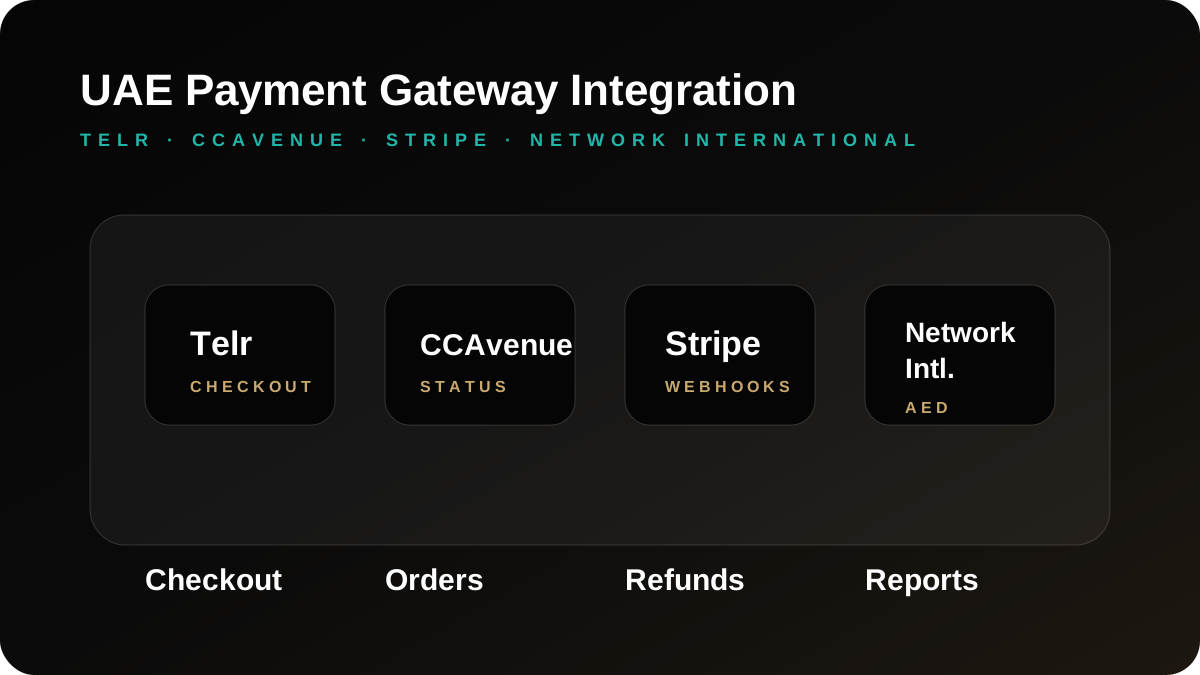
Payment gateway selection affects more than the checkout page. It affects customer trust, order status, refunds, invoice payments, finance reconciliation, support workflows, and the way the admin team understands revenue. UAE businesses often compare Telr, CCAvenue, Stripe, Network International, Amazon Payment Services, and other providers based on eligibility, card support, currencies, fees, settlement, documentation, APIs, and provider support.
The best gateway depends on the business model. A simple retail checkout, a clinic booking deposit, a B2B customer portal, an event registration platform, a SaaS subscription product, and an invoice payment workflow can all need different payment behavior. Choosing a gateway only by brand name is rarely enough.
Start with the payment journey
Before comparing providers, map how customers will pay. Will they pay for products, appointments, deposits, invoices, subscriptions, renewals, event applications, or account top-ups? Will payment happen on the website, through a hosted gateway page, from a mobile app, or through a payment link? Will the business need refunds, partial payments, recurring billing, multi-currency support, or finance reports? These answers shape the integration.
What to compare before choosing a gateway
Review merchant eligibility, supported currencies, local card and wallet options, hosted checkout availability, API quality, webhook or callback behavior, refund flow, recurring payment support, settlement reporting, fraud controls, plugin availability, test environment, and provider support. Also check whether the gateway works cleanly with the website platform, mobile app, CMS, or custom software architecture.
Telr payment gateway integration
Telr payment gateway integration may suit UAE businesses looking for regional online payment workflows for stores, bookings, portals, or invoice payments. The technical planning should review hosted payment options, callbacks, order references, test credentials, payment status updates, and admin reporting. Telr should be evaluated against the checkout journey, not only against a feature list.
CCAvenue payment gateway integration
CCAvenue payment gateway integration can be considered for eCommerce and service payment workflows where the provider requirements match the business. The main planning areas are checkout redirection, response handling, order confirmation, failed payment behavior, refund visibility, and transaction reporting. For custom systems, admin teams should be able to see the payment reference beside the order or customer record.
Stripe-style payment workflows
Stripe payment gateway integration is often considered for modern checkout, payment links, subscriptions, customer records, invoices, and webhook-driven status updates. It can be useful for SaaS-style products, customer portals, service deposits, and recurring billing workflows where available for the business. The key technical detail is reliable webhook handling so payment events update the correct record.
Network International payment gateway integration
Network International payment gateway integration may be suitable for regional checkout, booking payments, eCommerce stores, and custom portals. Planning should focus on provider documentation, hosted checkout behavior, order status, refunds, support processes, and how payment references will be displayed to finance or operations teams.
Checkout UX and payment confidence
A good checkout should be mobile-friendly, clear about amount and currency, transparent about order details, and easy to complete. Customers should understand whether the payment is successful, failed, pending, or cancelled. Error messages should be readable. Confirmation pages should not confuse the customer, and emails should match the actual payment status.
Status handling is where many integrations fail
The website or application should not mark an order as paid unless the payment status is confirmed correctly. Failed, cancelled, pending, refunded, duplicate, abandoned, and exception cases need proper handling. This is especially important for booking systems, eCommerce stores, invoice payments, and portals where the next business step depends on payment status.
How Gligx supports payment gateway projects
Gligx provides payment gateway integration in the UAE for eCommerce websites, booking systems, customer portals, invoice payments, subscriptions, and custom applications. We plan the gateway flow, checkout UX, webhooks, status updates, admin reporting, testing, and post-launch checks so the payment journey supports both customers and internal teams.
Payment gateway decisions should involve finance and operations
Payment gateway decisions are often treated as a developer task, but finance and operations teams should be involved early. They need to know how settlements will be checked, how refunds will be approved, how failed payments are handled, and how customer support will answer payment questions. If those workflows are ignored, the checkout may work technically but still create daily operational problems.
Questions to ask each payment provider
Ask whether the provider supports the required business activity, currencies, card types, payment links, recurring payments, refunds, webhooks, test transactions, hosted checkout, fraud controls, and reporting exports. Also ask how long activation takes and what documents are required. These practical details affect project timeline.
Integration with websites and custom software
For a standard online store, a plugin may be enough. For booking systems, portals, SaaS platforms, and invoice workflows, the payment gateway often needs custom status handling. This is where custom software development and payment integration overlap.
Payment gateway mistakes to avoid
Common mistakes include launching without testing failed payments, not storing payment references clearly, sending confusing confirmation emails, ignoring refund status, and not giving finance teams enough reporting visibility. Another mistake is assuming that a gateway plugin will fit every business model. Custom workflows often need custom handling.
Before go-live, test real user journeys on mobile. A checkout can pass technical testing but still feel confusing to customers if the amount, currency, order summary, error messages, and confirmation screen are not clear.
What finance teams should see after payment
Finance and operations teams should be able to find transaction ID, order ID, customer name, payment date, amount, status, refund notes, and settlement reference where applicable. This reduces repeated checking between gateway dashboards, website admin screens, accounting software, and support conversations.
Internal links for gateway-specific pages
Gligx has separate service pages for Telr integration, CCAvenue integration, Stripe integration, and Network International integration. These pages help buyers compare the technical flow before starting a project.
Frequently Asked Questions
Which payment gateway is best for UAE businesses?
There is no single best gateway for every business. The right choice depends on eligibility, business model, currencies, checkout needs, refunds, reporting, and integration requirements.
Can Gligx integrate Telr, CCAvenue, Stripe, and Network International?
Yes. Gligx can support integration planning and implementation based on provider documentation, account eligibility, and project requirements.
Why are payment callbacks or webhooks important?
They help the website or application update payment status accurately after checkout, including success, failure, pending, cancellation, and refund events.
Can payment gateways connect to invoices or booking systems?
Yes. Payment status can connect to invoices, bookings, orders, customer accounts, portals, and admin dashboards when the workflow is planned correctly.